Tirzepatide high concentration assay control pack workflows are increasingly relevant in analytical laboratories that need consistent, high-range reference materials for peptide characterization, assay verification, and batch-to-batch comparability. In an in-vitro environment, a well-designed control pack can support signal linearity studies, matrix-effect evaluation, stability tracking, and method suitability assessments for research use only.
For research teams working with peptide standards, the goal is not simply to generate a signal, but to understand how an assay behaves under demanding conditions. High-concentration controls are particularly useful when laboratories need to challenge the upper analytical range, detect drift, and verify whether dilution protocols preserve analyte integrity. This is especially important when handling complex peptide systems in chromatographic, ligand-binding, or hybrid LC-MS workflows.
At HelixSynth Research, educational content is developed for laboratory professionals seeking practical scientific context. Researchers comparing broader catalog options can review the full product collection and consult common technical documentation in the FAQs.
What is a Tirzepatide high concentration assay control pack?
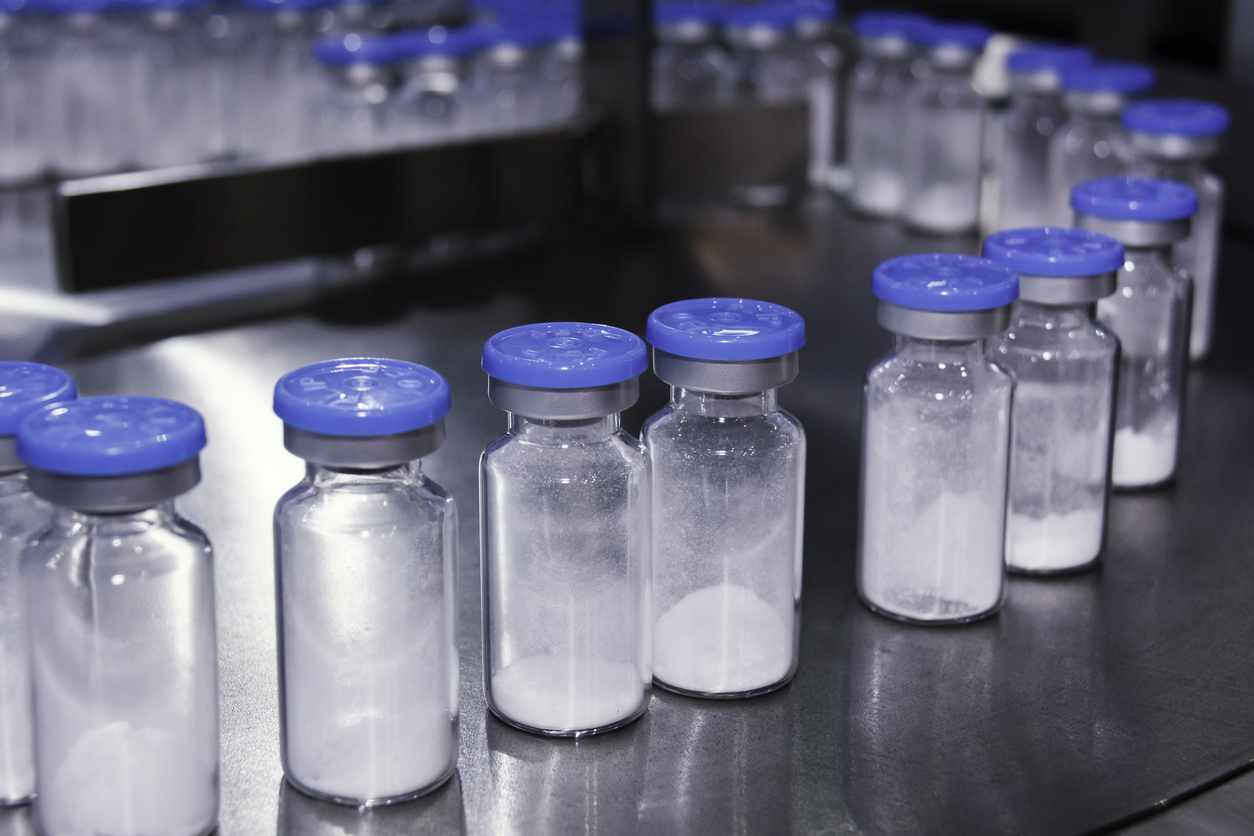
A Tirzepatide high concentration assay control pack is a research-oriented control material set intended to challenge and verify assay performance at elevated analyte levels. In laboratory practice, such a pack may include one or more high-range reference aliquots, supporting documentation, and storage or handling guidance designed to improve reproducibility across analytical runs.
These control materials are not the same as unknown samples. Instead, they function as anchor points within a quality framework. A laboratory might use them to confirm that:
- Peak shape remains acceptable at the top end of the calibration range
- Dilution integrity is maintained after sample preparation
- Recovery remains within predefined analytical limits
- Instrument response does not plateau prematurely
- Analyst-to-analyst handling differences do not distort output
For peptide-focused methods, the high-concentration range can expose issues that are not obvious at lower levels. Adsorption to plastics, aggregation risk, carryover, and matrix suppression may all become more visible as analyte concentration rises. A control pack therefore serves as a deliberate stress tool within assay development and routine QC.
Why a Tirzepatide high concentration assay control pack matters in peptide analytics
The analytical behavior of large or structurally complex peptides can shift significantly across concentration ranges. A Tirzepatide high concentration assay control pack helps laboratories examine the upper limits of method performance rather than assuming low-range validation data will extrapolate cleanly.
1. Upper-range linearity assessment
Many calibration models appear robust until the highest standards are introduced. High-concentration controls help determine whether detector response remains proportional or begins to compress. This is relevant for UV, fluorescence, ELISA-like detection systems, and mass spectrometric workflows.
2. Dilution integrity verification
In research workflows, high-level peptide samples are often diluted into a validated working range. A control pack can be used to test whether serial dilution alters signal recovery, introduces adsorption losses, or affects precision. This is especially useful when sample matrices differ from neat solvent controls.
3. Stability and degradation monitoring
High-concentration controls can reveal degradation pathways under freeze-thaw cycling, bench exposure, light exposure, or prolonged autosampler residence. Even subtle breakdown can become analytically visible when the starting concentration is sufficiently high.
4. Inter-run comparability
When multiple analysts, instruments, columns, or reagent lots are involved, control pack materials provide a standardized benchmark. A laboratory can trend the response of the same control over time and identify shifts before they affect unknown sample interpretation.
Researchers interested in adjacent metabolic peptide references sometimes compare assay design considerations with GLP-1 (S) (Research Semaglutide Equivalent), particularly when studying calibration strategy, peptide handling, and signal consistency in analogous in-vitro systems.
Core applications in laboratory workflows
A Tirzepatide high concentration assay control pack can be integrated into several stages of analytical and bioanalytical work. Although exact implementation depends on the platform, the scientific logic is broadly transferable.
Method development
During early-stage method development, high-range controls can help define the practical upper quantitation limit. Researchers may evaluate:
- Chromatographic peak symmetry
- Retention time stability
- Detector saturation thresholds
- Injection carryover after high-load runs
- Recovery following extraction or dilution steps
Method qualification or transfer
When a method is moved between laboratories or instruments, control pack samples can act as bridging materials. If a method performs similarly against the same high-range controls on both systems, transfer confidence increases.
Routine quality control
In routine operation, laboratories can place high-concentration controls at defined intervals in an analytical sequence. This approach may help detect run drift, reagent instability, or wash inefficiency before significant data loss occurs.
Stability research
Peptide stability studies often benefit from challenge conditions. High-concentration controls are informative in studies involving:
- Freeze-thaw resilience
- Short-term ambient hold times
- Refrigerated storage windows
- Autosampler dwell testing
- Container compatibility comparisons
When broader reagent systems are needed to support controlled sample preparation, some labs also evaluate structural workflow tools such as HelixSynth Certified Bacteriostatic Water Bulk Pack or matrix-focused reagents like KLOW Quadruple Bio-Signaling Matrix, depending on the experimental design and compatibility requirements.
Key design features of a strong high-concentration control strategy
Not all controls contribute equally to data quality. A scientifically useful control strategy should be structured around traceability, consistency, and fitness for the intended assay platform.
Defined concentration assignment
The nominal concentration should be assigned using a documented analytical basis. Whether a laboratory relies on orthogonal mass balance, chromatographic purity correction, or a validated reference comparison, concentration assignment must be clear enough to support reproducible interpretation.
Relevant matrix selection
Controls prepared in a matrix that approximates the working assay environment are often more informative than neat-solvent preparations alone. Matrix effects can influence extraction efficiency, ionization, binding response, and background noise.
Aliquot uniformity
Single-use or tightly standardized aliquots help reduce variability from repeated handling. This is particularly important with peptides that may adsorb to contact surfaces or degrade after multiple freeze-thaw events.
Documented storage expectations
A high-concentration control is only useful if its stability boundaries are understood. Laboratories should document temperature conditions, thaw management, light sensitivity, and acceptable hold times. All materials should be handled for research use only under internal laboratory SOPs.
Compatibility with orthogonal readouts
Whenever possible, controls should support more than one analytical lens. For example, a control used in LC-MS quantitation may also be suitable for retention monitoring, impurity trend analysis, or comparative chromatographic fingerprinting.
Common analytical challenges and how control packs help identify them
High-concentration peptide analysis can produce artifacts that are easy to miss if only mid-range controls are used. Incorporating a Tirzepatide high concentration assay control pack increases the chance of detecting these problems early.
Adsorption losses
Peptides may bind variably to tubes, vial inserts, pipette tips, or storage surfaces. A high-concentration control can help distinguish whether inconsistent recovery is due to concentration-dependent surface interaction or a broader preparation issue.
Carryover
After injection of a high-level sample, residual analyte may persist in the autosampler pathway, needle seat, or column head. A control pack allows targeted carryover testing by bracketing blank injections after high-load conditions.
Signal saturation
Detector or binding-system saturation can flatten expected response increases. Using high-range controls helps define the practical ceiling of the method rather than relying only on theoretical dynamic range.
Aggregation or conformational change
At elevated concentrations, peptides may behave differently in solution. Aggregation, partial precipitation, or altered chromatographic behavior can emerge. These effects may show up as broadened peaks, reduced recovery, or growing variability over time.
Lot-to-lot reagent variation
Control trend data can expose shifts associated with mobile phase preparation, column aging, buffer composition, or immunoreagent lot changes. Without a stable high-range reference, such shifts may be misattributed to random noise.
Best practices for implementing a Tirzepatide high concentration assay control pack
Laboratories can improve usefulness and comparability by integrating controls into a predefined QC plan rather than using them only when troubleshooting.
- Set acceptance windows in advance. Define allowable recovery, precision, and retention parameters before routine deployment.
- Use sequence placement intentionally. Include controls at run start, mid-run, and end-of-run where appropriate.
- Trend results statistically. Control charts can reveal drift that single-run review might miss.
- Document dilution schemes carefully. If high-concentration material must be diluted, track solvent, vessel type, time-to-analysis, and mixing conditions.
- Pair with orthogonal observations. Quantitative response, chromatographic shape, and visible solution quality can all add context.
- Reassess after method changes. New columns, new operators, or revised sample prep steps warrant renewed control characterization.
In laboratories managing multiple peptide and cofactor systems, it may be useful to compare handling discipline across product classes, such as SS-31 Mitochondrial Reagent or Tributyrin Postbiotic Core, especially when developing internal SOP frameworks for stability-sensitive materials.
Documentation, traceability, and data integrity
The scientific value of a control pack extends beyond the vial itself. Documentation quality strongly influences whether data are interpretable months later. Useful records typically include:
- Lot identification and preparation date
- Assigned concentration and analytical basis
- Recommended storage conditions
- Observed short-term and long-term stability notes
- Container type and fill volume
- Any known matrix components relevant to assay behavior
Traceability is especially important when comparing historical runs, evaluating deviations, or supporting internal assay revisions. Well-documented controls can help transform isolated measurements into a coherent long-term dataset.
Because peptide analytics can be sensitive to subtle procedural changes, laboratories should ensure that all control materials are restricted to qualified scientific personnel and handled strictly for research use only. This framing helps maintain appropriate laboratory governance and prevents misuse outside validated in-vitro settings.
Conclusion
A Tirzepatide high concentration assay control pack is more than a reference sample at the top of a curve. In laboratory science, it functions as a high-value quality tool for evaluating upper-range linearity, dilution integrity, stability, carryover risk, and long-term assay consistency. When supported by clear documentation, careful matrix selection, and predefined acceptance criteria, such control materials can substantially strengthen peptide assay reliability.
For research groups building robust in-vitro workflows, the best results come from integrating high-concentration controls into routine analytical planning rather than reserving them solely for troubleshooting. That disciplined approach improves comparability, sharpens method understanding, and supports better scientific decisions across peptide-focused research programs.