Mounjaro is widely recognized as the trade name associated with tirzepatide, a dual incretin-oriented peptide of major interest in modern metabolic research. In laboratory settings, Mounjaro is best understood through its receptor pharmacology, peptide architecture, analytical handling, and use as a comparator framework in in-vitro studies. This article reviews Mounjaro from a strictly scientific perspective, emphasizing cell-based assays, receptor signaling questions, and reference-material strategy for investigators working with peptide systems for research use only.
What Is Mounjaro in a Research Context?
In a research context, Mounjaro refers to tirzepatide as a benchmark molecule for studying incretin-linked signaling networks. Rather than framing the compound through therapeutic use, laboratory teams typically evaluate it as a tool for understanding dual agonism across glucose-dependent insulinotropic polypeptide and glucagon-like peptide-1 associated pathways. This makes Mounjaro relevant to receptor-binding studies, second-messenger assays, internalization experiments, and comparative peptide profiling.
Tirzepatide is especially interesting because it does not behave like a simple single-receptor agonist. Its scientific value lies in how it helps model pathway bias, potency differences across engineered cell lines, and downstream transcriptional responses under controlled in-vitro conditions.
Why researchers examine tirzepatide
- To compare dual-pathway activation against single-pathway GLP-1 reference reagents
- To evaluate cAMP signaling amplitude and duration
- To study receptor trafficking, desensitization, and internalization kinetics
- To investigate peptide stability under assay and storage conditions
- To benchmark metabolic signaling reagents within standardized lab panels
For labs building broader comparator sets, related materials may include GLP-1 (S) (Research Semaglutide Equivalent), Semaglutide High-Density Adipose Standard (Wegovy Co-Factor), and Exenatide ER Extended Release Suspension (Bydureon BCise Co-Factor). These references can support cross-platform analysis when researchers want to compare receptor selectivity and assay performance.
Mounjaro Receptor Pharmacology and Signaling
The main scientific interest in Mounjaro centers on dual incretin receptor engagement. In cell models expressing relevant receptors, investigators often assess whether signal output differs by receptor density, membrane environment, peptide concentration range in assay wells, and exposure time. Since dual agonists can produce complex response curves, careful experimental design is critical.
Key pathways commonly evaluated
- cAMP accumulation: a primary readout in receptor activation studies
- Beta-arrestin recruitment: informative for desensitization and trafficking patterns
- Receptor internalization: useful for microscopy and tagged-receptor systems
- Gene expression changes: measured in downstream transcriptional analyses
- Phosphorylation cascades: explored in broader signaling network studies
Researchers should note that signaling output may vary depending on whether a system uses transiently transfected cells, stable receptor-expressing lines, primary cultures, or membrane-preparation assays. Mounjaro therefore functions not only as a peptide of interest but also as a stress test for assay sensitivity and reproducibility.
Comparator design matters here. For example, adding a DPP-4 related control such as Sitagliptin DPP-4 Protease Inactivator Base (Januvia Co-Factor) may be useful in mechanistic workflows where enzyme-linked incretin degradation is part of the study framework. While not a direct dual agonist comparator, it can contribute to pathway interpretation in integrated metabolic assay panels.
Structural Features of Tirzepatide Relevant to Mounjaro Research
To understand Mounjaro scientifically, it helps to examine tirzepatide as a modified peptide system engineered for defined receptor interaction and altered physicochemical behavior. Peptide sequence composition, side-chain modifications, and lipid-associated features can all influence receptor engagement, albumin affinity in some assay formats, and observed stability over time.
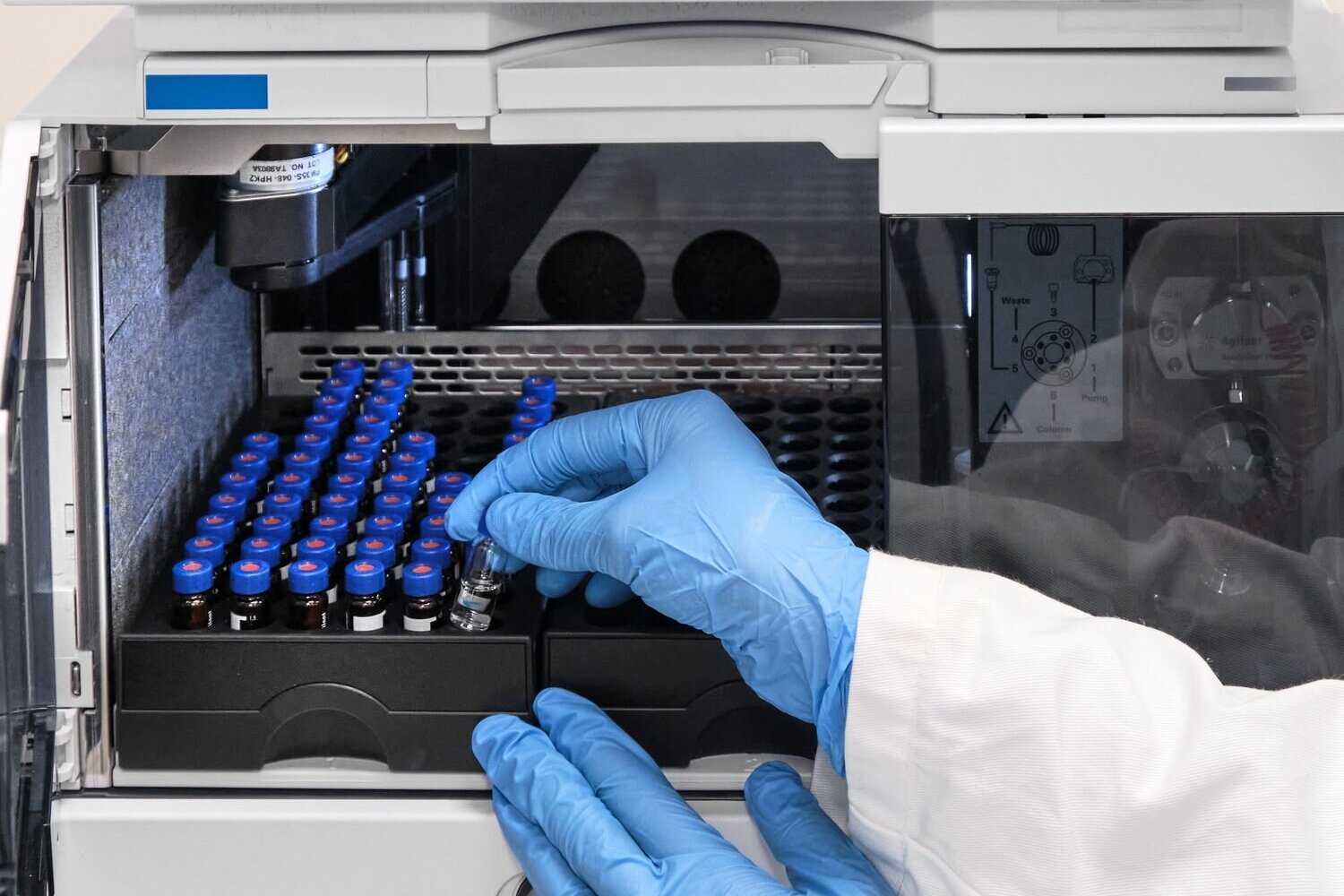
In analytical laboratories, the structural profile of Mounjaro may be assessed through orthogonal methods such as:
- Mass spectrometry for identity confirmation
- HPLC or UHPLC for purity and related-substance profiling
- Peptide mapping for sequence-level verification
- Stress testing under thermal, pH, or agitation conditions
- Bioassay correlation to connect analytical quality with functional activity
These methods help determine whether observed differences in receptor signaling arise from true pharmacology or from peptide degradation, adsorption loss, aggregation, or preparation error. In this sense, the scientific handling of Mounjaro is inseparable from the quality system used to evaluate it.
Common variables affecting peptide behavior in vitro
- Buffer composition and ionic strength
- Container surface adsorption
- Freeze-thaw frequency
- Exposure to light and elevated temperature
- Assay plate material and incubation duration
Labs that routinely prepare peptide materials may also consult broader catalog resources at /products to align reference peptides, comparator standards, and supporting reagents within one workflow.
Designing In-Vitro Assays for Mounjaro
Well-designed in-vitro studies are essential for extracting meaningful data from Mounjaro. Because tirzepatide engages more than one incretin-linked target class, assay architecture should be selected according to the specific scientific question. A binding study asks something different from a trafficking assay, and a transcriptional endpoint cannot be interpreted exactly like a short-interval second-messenger readout.
Practical assay planning considerations
- Choose receptor expression systems with validated baseline responsiveness
- Include single-pathway comparators for signal separation
- Run time-course experiments, not only endpoint measurements
- Use orthogonal readouts when possible to confirm conclusions
- Track plate controls and inter-run variability carefully
A basic workflow may involve receptor-expressing cell lines, peptide incubation under tightly controlled conditions, cAMP or reporter-gene measurement, and later confirmation using internalization or beta-arrestin assays. If long-duration incubations are planned, peptide stability should be verified independently.
For researchers comparing next-generation incretin constructs, Retatrutide Sequence Block can be relevant in advanced metabolic signaling studies. Used alongside Mounjaro-aligned benchmarks, such materials may help characterize broader agonist classes in discovery-stage research for research use only.
Recommended control categories
- Negative controls: vehicle and non-binding peptide controls
- Positive controls: known incretin-pathway agonist standards
- Stability controls: fresh versus stressed peptide preparations
- System controls: receptor-null or low-expression cell backgrounds
This structure helps ensure that results attributed to Mounjaro are genuinely due to target biology rather than assay noise or preparation artifacts.
Analytical Handling, Storage Logic, and Quality Considerations
In research laboratories, peptide quality can strongly influence apparent potency and signal reproducibility. With Mounjaro-oriented work, attention should be given to lot consistency, storage temperature alignment with internal SOPs, and minimization of repeated manipulation. Even subtle differences in handling may affect peptide integrity in sensitive receptor assays.
Many labs build internal quality checkpoints before initiating long assay series. These checkpoints often include visual inspection, chromatographic review, identity confirmation, and small-scale pilot testing before full experimental deployment.
Quality-focused best practices
- Document all preparation conditions in batch records
- Use low-binding consumables where appropriate
- Prepare aliquots to reduce repeated freeze-thaw exposure
- Confirm functional signal with a pilot run before large screens
- Pair analytical and biological data for stronger interpretation
Where compatible with established laboratory procedures, support materials such as HelixSynth Certified Bacteriostatic Water Bulk Pack may be reviewed as part of a broader preparation workflow. Any use should remain confined to validated internal research procedures and controlled laboratory applications for research use only.
Mounjaro Versus Other Incretin Research Standards
Mounjaro is frequently discussed alongside other incretin-linked reference materials because its dual-agonist profile can produce distinct assay signatures. From a scientific standpoint, comparison is less about commercial naming and more about understanding receptor preference, bias, durability of response, and matrix-dependent assay behavior.
Single-pathway comparators can help isolate whether an observed effect is driven by one receptor population more than another. That is particularly useful in engineered systems, co-culture models, and screening platforms designed to identify differential pathway activation.
Useful comparison questions
- Does the signal curve differ from GLP-1-focused reference reagents?
- Are internalization kinetics faster or slower under matched conditions?
- Is prolonged signal retention observed in the selected assay format?
- How does stress degradation alter apparent receptor activity?
- Do media components change relative performance among comparators?
In some metabolic research programs, investigators also explore adjacent tools such as NAD+ Pure Core Reagent or MOTS-c Mitochondrial Reagent when building broader cellular energy and signaling panels. These are not direct substitutes for Mounjaro, but they may complement mechanistic studies focused on metabolic regulation.
Frequently Asked Laboratory Questions About Mounjaro
Is Mounjaro the same as tirzepatide in scientific literature?
In most scientific and commercial contexts, Mounjaro refers to tirzepatide. In laboratory writing, it is usually best to identify the peptide precisely and describe the assay system used.
What is the main research value of Mounjaro?
The main value of Mounjaro in vitro is as a dual incretin-pathway benchmark for studying receptor signaling, pathway bias, comparative agonism, and peptide performance in controlled assays.
Why are comparator standards important?
Comparator standards help determine whether a measured effect is specific, reproducible, and interpretable. They also support assay qualification and cross-study consistency.
Where can researchers review general reagent questions?
General policy and catalog guidance can be found at /faqs, which may help researchers locate additional information relevant to peptide and reagent workflows.
Conclusion: How Researchers Should Think About Mounjaro
Mounjaro remains a highly relevant subject in peptide science because tirzepatide provides a valuable model for dual receptor agonism, assay discrimination, and metabolic signaling analysis. The most productive way to study Mounjaro is through rigorous in-vitro design: validated receptor systems, appropriate comparators, orthogonal analytical methods, and careful quality control. When approached this way, Mounjaro can serve as a meaningful reference point in modern peptide research for research use only.