Peptide reconstitution with bacteriostatic water is a common laboratory task when lyophilized reference peptides must be brought into solution for analytical or in-vitro research workflows. In a research setting, the goal is not merely to dissolve the material, but to do so in a way that supports sterility, concentration accuracy, chemical stability, and reproducibility. This guide explains the scientific considerations behind peptide reconstitution with bacteriostatic water, when it may be appropriate, and how researchers can document the process carefully for research use only.
Because peptide behavior varies by sequence, purity profile, charge distribution, hydrophobicity, and intended assay conditions, no single solvent system is universally optimal. Bacteriostatic water may be suitable for some laboratory applications, but it should always be evaluated against the peptide’s physicochemical properties and the needs of the downstream experiment. Researchers working with specialized materials can also review the broader product catalog and common handling questions in the FAQ section before beginning a new preparation protocol.
Peptide reconstitution with bacteriostatic water: what it means in the lab
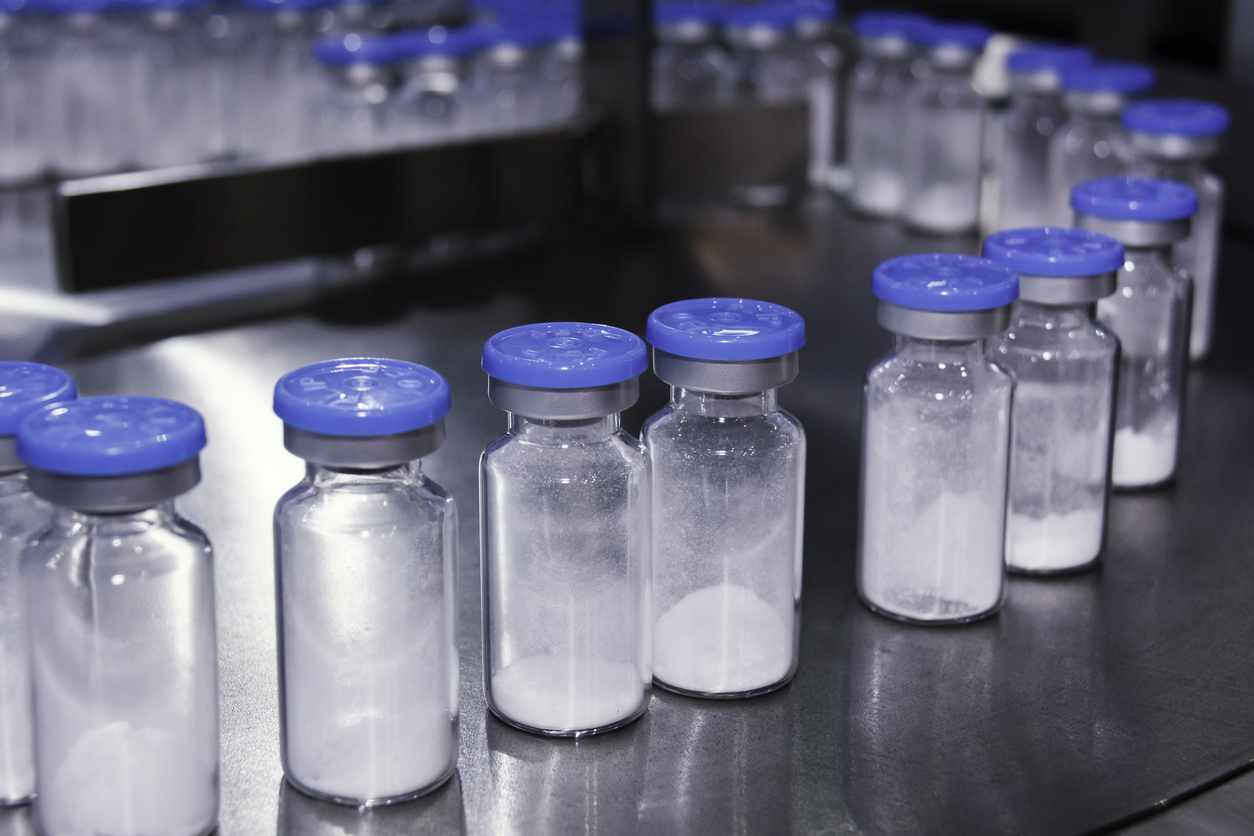
In laboratory practice, reconstitution refers to the conversion of a dry, often lyophilized peptide powder into a liquid solution of defined concentration. Bacteriostatic water is sterile water containing a preservative, commonly benzyl alcohol, intended to inhibit microbial proliferation after first entry. In a research environment, this can offer practical advantages for short-term repeated access to a stock solution, especially when multiple aliquots are not immediately prepared.
However, peptide reconstitution with bacteriostatic water is not automatically the best choice for every peptide. The preservative environment and the aqueous matrix may affect solubility, aggregation tendency, or stability for certain sequences. Some peptides dissolve readily in water-based systems, while others first require a minimal volume of acidified water, dilute acetic acid, or a small amount of compatible organic solvent before further dilution into an aqueous buffer.
Researchers should distinguish between three related but separate goals:
- Dissolution: getting the peptide fully into solution without visible particulates.
- Stability: maintaining sequence integrity, preventing hydrolysis, oxidation, or aggregation over the planned study period.
- Usability: producing a concentration and solvent environment compatible with the intended assay platform.
These goals are linked, but they are not identical. A peptide can dissolve quickly and still perform poorly later if the solvent system accelerates degradation or introduces assay interference.
When bacteriostatic water is appropriate for peptide work
Peptide reconstitution with bacteriostatic water is often considered when a researcher needs a sterile aqueous vehicle and expects limited repeated handling of the stock solution. In many analytical and in-vitro settings, it is selected because it is easy to use, widely recognized in lab workflows, and may reduce contamination risk compared with plain sterile water after opening.
Potential advantages
- Supports sterile technique in multi-step lab workflows.
- May reduce microbial growth risk during short-term handling.
- Useful for researchers preparing stock solutions that will be subdivided or repeatedly sampled.
- Convenient for peptides known to be water soluble under neutral conditions.
Possible limitations
- The preservative may not be ideal for every peptide chemistry.
- Some downstream cell-based or biochemical assays may be sensitive to solvent composition.
- Hydrophobic peptides may remain partially insoluble in a purely aqueous environment.
- Long-term stability is not guaranteed simply because a bacteriostatic solvent was used.
For these reasons, peptide reconstitution with bacteriostatic water should be approached as a formulation decision rather than a default habit. A sequence such as the Melanotan II (MT-2) Sequence Block or the PTD-DBM Signaling Peptide may have different handling needs based on structure and intended in-vitro use. Likewise, peptide reference standards such as the Liraglutide Polypeptide Standard may require especially careful concentration control and assay-specific compatibility review.
Core scientific factors that influence successful reconstitution
A rigorous peptide preparation workflow starts with the sequence and ends with the assay. Between those points, several variables determine whether peptide reconstitution with bacteriostatic water will be straightforward or problematic.
1. Peptide sequence and solubility profile
Basic, acidic, amphipathic, and highly hydrophobic peptides can behave very differently in aqueous solvents. Peptides rich in nonpolar residues may adsorb to tube walls or form visible film-like aggregates. Charged peptides may dissolve more efficiently, but pH still matters.
2. Final concentration target
Highly concentrated stocks are convenient for storage and later dilution, but concentration increases the chance of aggregation for some sequences. If a peptide appears slow to dissolve, the target concentration may be too aggressive for the chosen solvent system.
3. Temperature and handling conditions
Gentle equilibration to room temperature before opening a cold vial can reduce condensation. During peptide reconstitution with bacteriostatic water, vigorous shaking is usually less desirable than controlled swirling or gentle inversion, since foam and air-liquid interface exposure can stress some molecules.
4. Surface adsorption and material loss
Low-mass peptide preparations can suffer from adsorption to plastic surfaces, especially during serial transfer steps. Using low-binding tubes and minimizing unnecessary transfers can improve mass recovery and reproducibility.
5. Downstream assay compatibility
The solvent used for reconstitution becomes part of the experimental system unless the stock is further processed. Researchers should confirm that preservative-containing water is acceptable for chromatography, receptor-binding work, enzymatic assays, or cell exposure studies. In some workflows, a concentrated stock is prepared in one solvent and diluted into the assay buffer immediately before use.
Best-practice workflow for peptide reconstitution with bacteriostatic water
The exact protocol should be defined by the laboratory’s SOPs and the material’s documentation, but the following framework captures best practices for research use only.
- Review the peptide record. Confirm identity, mass, lot data, storage history, and any supplier guidance regarding solvent preferences.
- Allow thermal equilibration if needed. If the vial was stored cold, let it reach room temperature while sealed to reduce moisture condensation on the peptide.
- Use aseptic technique. Clean the work area, use sterile tools, and avoid repeated environmental exposure.
- Calculate the desired stock concentration before opening the vial. Preplanning reduces handling time and transfer error.
- Add solvent slowly. Introduce bacteriostatic water gently along the vial wall rather than directly blasting the powder cake.
- Encourage dissolution carefully. Swirl or invert gently and allow time for complete wetting. Avoid unnecessary agitation.
- Inspect visually. Look for clarity, undissolved particles, film formation, or turbidity.
- Aliquot promptly if appropriate. Dividing the solution into single-use or limited-use portions can improve consistency and reduce repeated freeze-thaw or repeated access events.
- Label thoroughly. Record concentration, solvent, date of reconstitution, lot number, and storage conditions.
- Document observations. Note dissolution time, appearance, and any deviations from the standard process.
Peptide reconstitution with bacteriostatic water should always be documented with enough detail that another researcher could repeat the preparation under matching conditions. That level of recordkeeping is especially important in comparative studies involving multiple standards, including non-peptide reference materials such as the Metformin HCl Biguanide Metabolic Control or receptor-focused research compounds like Ibutamoren Orally-Active GHS, where cross-project consistency matters.
Concentration calculations and dilution planning
One of the most frequent sources of error in peptide work is concentration miscalculation. Even a fully dissolved peptide stock has limited value if the recorded concentration is inaccurate. Researchers should establish the target stock concentration based on assay sensitivity, pipetting practicality, and known solubility limits.
General calculation approach
Use the basic relationship:
Concentration = mass / volume
For example, if a vial contains a known mass of peptide, the volume of bacteriostatic water added determines the nominal stock concentration. From there, secondary working solutions can be prepared by standard dilution methods appropriate to the lab’s SOP.
- Choose a stock concentration that supports accurate pipetting.
- Avoid preparing a stock so concentrated that visible precipitation occurs.
- Design intermediate dilutions when direct transfer volumes would be too small for reliable handling.
- Record all assumptions, especially if the listed mass reflects a salt form or includes counterions.
Where precision is essential, researchers may verify concentration by an orthogonal analytical method rather than relying only on nominal mass and volume. UV-based methods, amino acid analysis, or chromatographic quantification may be relevant depending on the peptide and project design.
Stability, storage, and contamination control
Peptide reconstitution with bacteriostatic water does not eliminate normal stability concerns. The solution may still be vulnerable to hydrolysis, oxidation, aggregation, adsorption, or freeze-thaw stress. The appropriate storage plan depends on the peptide’s chemistry and the expected duration of use.
Practical stability considerations
- Short-term use: A refrigerated stock may be acceptable for some peptides if supported by internal validation.
- Longer storage: Aliquoted frozen storage is often preferred to reduce repeated handling.
- Light sensitivity: Some sequences or attached moieties may require protection from light.
- Oxidation risk: Methionine, cysteine, tryptophan, and other residues can be vulnerable under certain conditions.
Even when using bacteriostatic water, contamination control remains essential. The preservative is not a substitute for sterile technique, and it does not protect against all forms of degradation. Researchers should discard any solution that shows unexpected color change, turbidity, precipitation inconsistent with known solubility behavior, or unexplained analytical drift.
Recommended documentation fields
- Peptide name and lot number
- Initial mass and stated purity
- Solvent identity and source
- Volume added
- Nominal concentration
- Date and time of reconstitution
- Operator initials
- Storage temperature
- Aliquot scheme
- Observed appearance after dissolution
Common mistakes researchers should avoid
Many avoidable peptide failures arise from routine handling errors rather than from the peptide itself. In the context of peptide reconstitution with bacteriostatic water, several issues appear repeatedly across laboratory settings.
- Assuming all peptides are water soluble: sequence-dependent behavior matters.
- Skipping pre-calculation: adding a convenient volume without concentration planning can disrupt the whole assay workflow.
- Over-agitating the vial: excessive mechanical stress may promote foam or interface-related instability.
- Ignoring assay interference: preservatives or solvent traces may affect sensitive readouts.
- Repeatedly entering the same vial: each access increases contamination and variability risk.
- Failing to aliquot: repeated freeze-thaw or repeated bench exposure can reduce consistency.
- Poor labeling: undocumented concentration or solvent details make data difficult to interpret later.
These points are especially relevant when working with high-value or low-mass materials for research use only, where sample conservation and analytical traceability are priorities.
How to decide whether bacteriostatic water is the right choice
The best solvent choice is the one that preserves peptide integrity while fitting the downstream experiment. Before choosing peptide reconstitution with bacteriostatic water, ask the following:
- Is the peptide known to dissolve in a neutral aqueous system?
- Could the preservative affect the intended assay?
- Is a more specialized solvent needed for initial wetting?
- Will the stock be used immediately, aliquoted, or stored?
- Has the lab validated this solvent choice for similar sequences?
If the answers are uncertain, a small-scale pilot reconstitution with analytical verification can be more informative than relying on assumptions. Solubility testing, visual inspection, and chromatographic assessment often reveal whether the chosen approach is robust enough for routine work.
At HelixSynth Research, careful peptide handling begins with sequence-aware planning, solvent compatibility review, and thorough documentation. Whether researchers are working with signaling peptides, comparative standards, or specialized reference compounds, peptide reconstitution with bacteriostatic water should be treated as a controlled laboratory procedure rather than a generic preparation step. When performed thoughtfully, it can support consistent and reproducible in-vitro workflows for research use only.